I build the operating middle that strategy slides skip
Based in Michigan. I help companies connect AI, platforms, and people—from early use cases to enterprise adoption.
- I start with the work people need to get done
- I connect new capabilities to the systems teams already use
- I plan for ownership, adoption, and ongoing operation


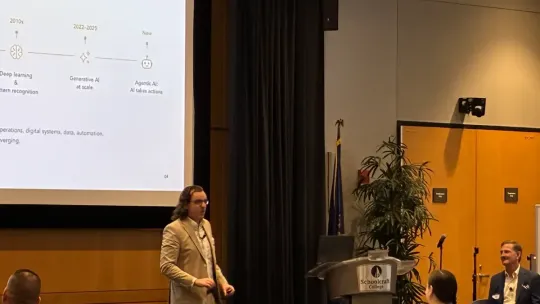
Practical AI, grounded in operating experience
The same discipline that connects finance, cloud platforms, and workflows applies to AI: start with a real need, make it usable, and build for what comes next.
Start with the constraint
Clarify the business problem before choosing a platform, model, or automation.
- Use cases tied to real decisions and handoffs
- Existing systems and data considered early
- Clear boundaries for what to automate
Make adoption part of the build
The work continues after a tool goes live. Teams need a usable workflow and a clear owner.
- AI in the tools people already open
- Human review where judgment matters
- Operating guidance alongside implementation
Build for enterprise scale
Enterprise AI needs more than a successful pilot. Integration, access, and ongoing operation have to work together.
- Connections to enterprise platforms
- Governance and access designed in
- Rollout and adoption treated as connected work
From connected systems to enterprise AI
Finance and cloud integration built the foundation. The next chapter is helping companies navigate AI and scale it across the enterprise.
2019
Finance systems integration
- Sage Intacct and ADP across departmental handoffs
- Custom APIs replacing spreadsheet reconciliation
2020
Cloud platforms and endpoints
- Identity, mail, and device management as one cutover
- Disaster recovery written into the operating model
2023
Forecasts for the committee
- Forecasting and exception reporting for leadership decisions
2023
Revenue-cycle reporting
- Revenue-cycle playbooks the team could run without me
- SQL reporting that made unbilled work visible in time to act
2024
AI in the daily workflow
- Clinical-note review before submission, not after the audit
- Coaching loops that improved documentation quality in place
2025
Helping companies navigate AI
- Helping teams identify practical AI use cases and evaluate their options
- Connecting tool selection and adoption planning to the way the business works
2026
Scaling AI across the enterprise
- Scaling AI across teams, workflows, and enterprise systems
- Bringing integration, governance, and operational ownership into the same plan
Finance context. Systems craft. AI in practice.
A foundation in finance informs how I approach technology: understand the decision, connect the systems, and keep the operating consequences in view.
Education
Bachelor of Arts in Finance
Calvin College
Finance with complementary study in Mandarin Chinese and development economics—modeling, international business, and structured decision-making under constraint.
Practical toolkit
The capabilities I bring together when a technology decision needs to become a working part of the business.
- Systems architecture
- Enterprise AI adoption
- Workflow automation
- APIs & integrations
- Azure & Microsoft 365
- Data & decision systems
- Governance & access
- Financial operations
From the next AI use case to enterprise scale
Working out where to begin, or how to scale what already works? Start with the workflow, system, or adoption challenge in front of your team.